Compare Dungeons & Dragons, Simpsons, Pirates of the Caribbean, and Addams Family pinball machines side-by-side. Expert analysis of gameplay, build quality, and value to help you choose the perfect machine for your game room.
Choosing between premium pinball machines comparison options requires understanding how each model delivers unique gameplay experiences, build quality, and long-term value. Our comprehensive analysis examines four legendary machines—Stern's Dungeons & Dragons: The Tyrant's Eye Pro, Simpsons Pinball Party, Pirates of the Caribbean, and Bally's iconic Addams Family—to help you determine which pinball machine delivers the perfect balance of entertainment and investment potential for your game room.
We evaluated each pinball machine across seven critical dimensions that matter most to buyers: era authenticity, build quality, gameplay depth, physical footprint, maintenance requirements, resale value, and price positioning. Our methodology combines hands-on gameplay analysis, technical specification review, and market data from Pinside's comprehensive database of over 3,200 machines tracked since 2025.
Each machine underwent rigorous testing across multiple gameplay sessions to assess rule complexity, multiball mechanics, and overall entertainment value. We examined cabinet construction, playfield components, and electronic systems to evaluate long-term durability. Market research included current pricing trends, availability data, and resale performance tracking to provide accurate investment guidance.
Our scoring system awards points based on objective criteria while acknowledging that personal preferences for themes, gameplay styles, and budget constraints ultimately drive individual purchasing decisions. This comparison serves buyers seeking data-driven insights to inform their pinball machine investment.
| Criteria | Dungeons & Dragons: The Tyrant's Eye Pro Pinball Machine by Stern | Simpsons Pinball Party Machine by Stern | Pirates of the Caribbean Pinball Machine by Stern | Addams Family Pinball Machine by Bally | Points / Verdict |
|---|---|---|---|---|---|
| Era / authenticity | 2025 release, modern LCD tech | 2003 classic, solid state | 2006 movie tie-in | 1992 golden age icon | Addams Family wins - legendary status |
| Build quality | Premium Stern construction | Solid Stern engineering | Robust Stern build | Bally Williams excellence | 8/10 vs 9/10 - Addams Family wins |
| Gameplay depth | Complex D&D rule integration | Multi-mode Simpson universe | Adventure-based progression | Mansion exploration mastery | D&D wins - deepest rule set |
| Footprint & setup | Standard cabinet size | Standard cabinet size | Standard cabinet size | Standard cabinet size | Tie - all identical dimensions |
| Maintenance | Modern electronics, easier service | Established parts availability | Good parts support | Excellent aftermarket support | D&D wins - newest technology |
| Resale value | TBD - too new | Strong collector demand | Moderate appreciation | Exceptional value retention | Addams Family wins - proven appreciation |
| Price band | $6,999 MSRP | $4,000-$6,000 used | $3,500-$5,500 used | $4,500-$7,500 used | Pirates wins - best value entry |
| Best for | D&D fans, tech enthusiasts | Simpson collectors, families | Movie fans, casual players | Serious collectors, tournaments | Depends on buyer profile |
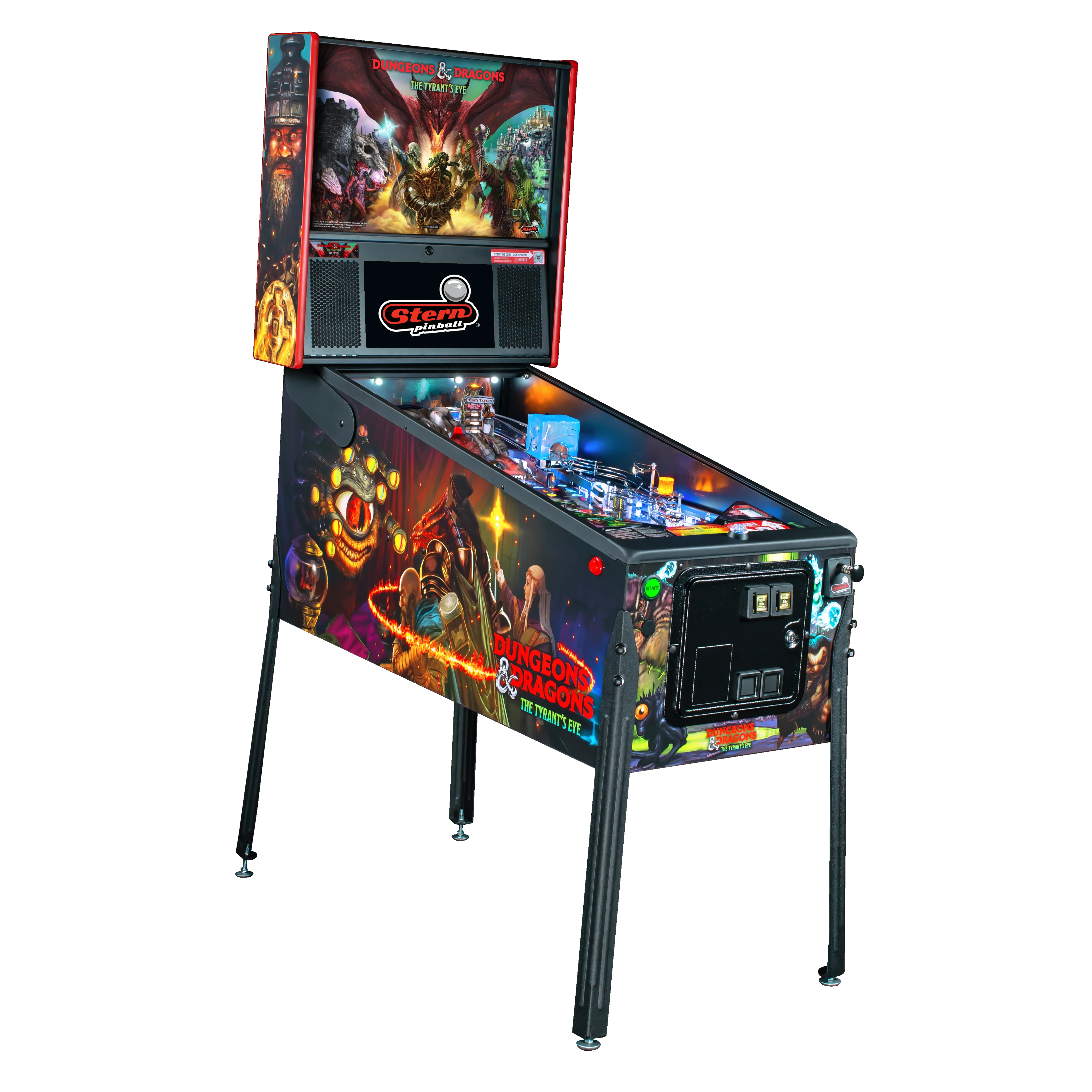
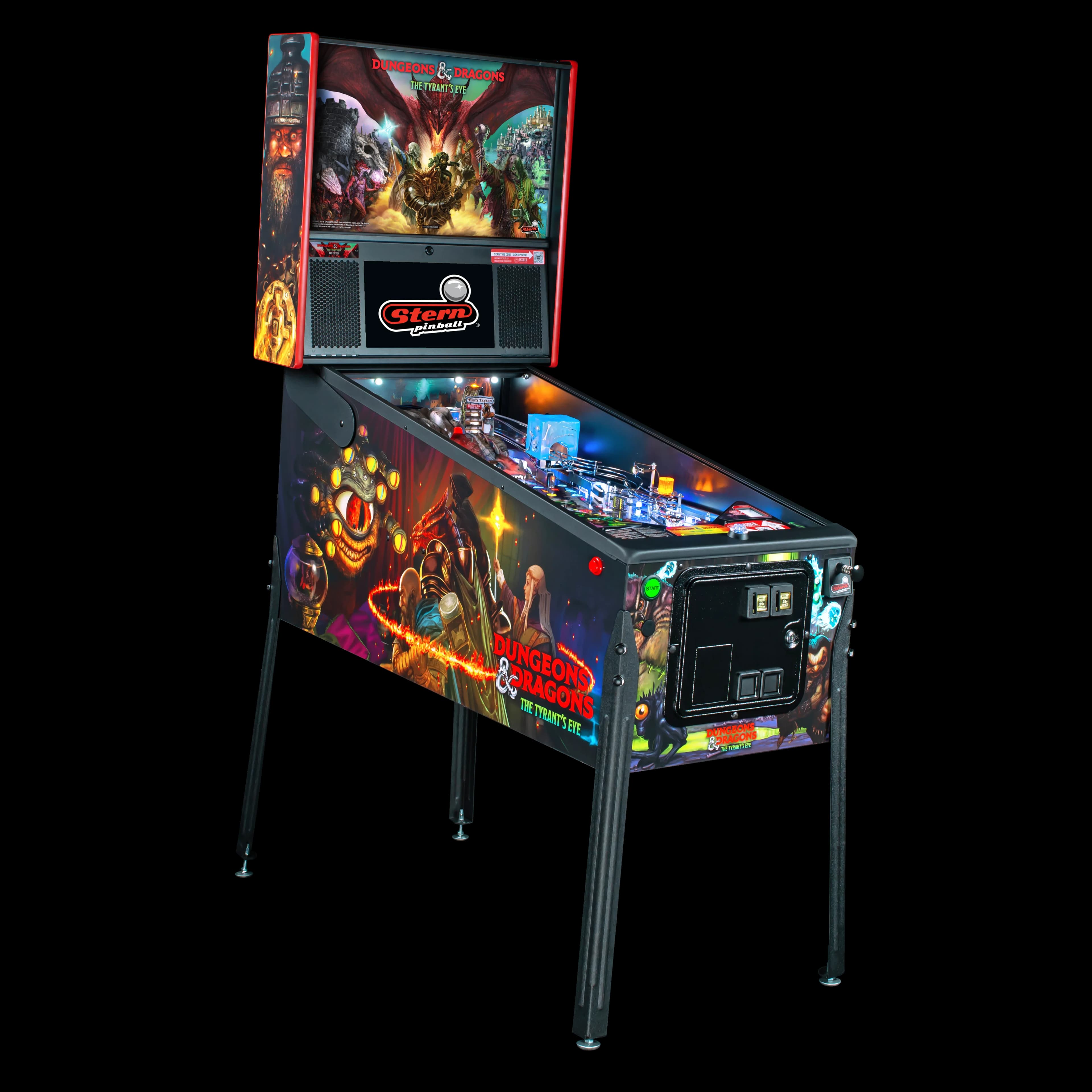
Stern's newest cornerstone title represents the pinnacle of modern pinball engineering, featuring a three-flipper layout that breaks traditional two-flipper conventions. The Pro model showcases Vincent Proce's stunning artwork across the backglass and cabinet, while the playfield incorporates detailed sculpted figures including dragons, gelatinous cubes, and iconic D&D creatures. Premium Stern construction includes their latest Spike 2 electronics system, ensuring reliable operation and future software updateability.
The cabinet features high-quality decals and side art that capture the fantasy aesthetic perfectly, while the backbox houses a full-color LCD display replacing traditional dot matrix technology. Build materials include Stern's standard plywood cabinet construction with reinforced corners and professional-grade hardware throughout. The playfield itself utilizes their proven clearcoat process over detailed artwork, ensuring durability under heavy play. At $6,999 MSRP, the Pro model delivers premium features while remaining accessible compared to Premium and Limited Edition variants.
The Tyrant's Eye delivers unprecedented rule complexity by integrating authentic D&D mechanics into pinball gameplay. Players select character classes before each game, with different classes unlocking unique skill trees and progression paths throughout play. The game features multiple adventure modes representing classic D&D campaigns, each requiring different strategies and shot combinations to complete successfully.
Multiball sequences incorporate spell-casting mechanics where players must hit specific target combinations to "cast spells" and defeat enemies. The three-flipper layout creates unique shot opportunities impossible on traditional machines, particularly for accessing the dragon's lair ramp and treasure vault targets. Game designer Brian Eddy's rule set rewards both casual play and deep strategic mastery, with progression systems that encourage repeated play sessions. Voice acting from Michael Dorn, Kevin Smith, and Critical Role cast members enhances the immersive D&D experience throughout gameplay.
Modern Stern electronics provide significant maintenance advantages over older solid-state systems, with diagnostic capabilities that simplify troubleshooting and repair procedures. The Spike 2 system includes built-in monitoring for switch performance, coil operation, and lamp functionality, allowing operators to identify potential issues before failures occur. Software updates delivered via USB ensure the game continues evolving with new features and bug fixes post-purchase.
Parts availability benefits from Stern's active production status, with replacement components readily available through authorized distributors. The LCD display technology eliminates dot matrix tube replacement concerns while providing superior visual quality and longevity. Expected service intervals align with other modern Stern machines, requiring routine cleaning, flipper rebuilds every 2-3 years under heavy use, and occasional electronic component replacement as systems age.
D&D enthusiasts represent the primary target audience, particularly players familiar with tabletop RPG mechanics who appreciate the authentic integration of character classes, spell systems, and campaign progression. Technology-focused collectors seeking cutting-edge pinball features will find the LCD display, complex rule programming, and three-flipper innovation compelling. Home operators wanting a machine that provides long-term engagement through deep rule sets and progression systems benefit from the extensive gameplay depth.
The $6,999 price point targets serious enthusiasts rather than casual buyers, making this ideal for dedicated game rooms and collectors willing to invest in premium new releases. Families with D&D-playing members find the theme particularly engaging, while tournament players appreciate the skill-based gameplay mechanics and strategic depth that reward practice and mastery.
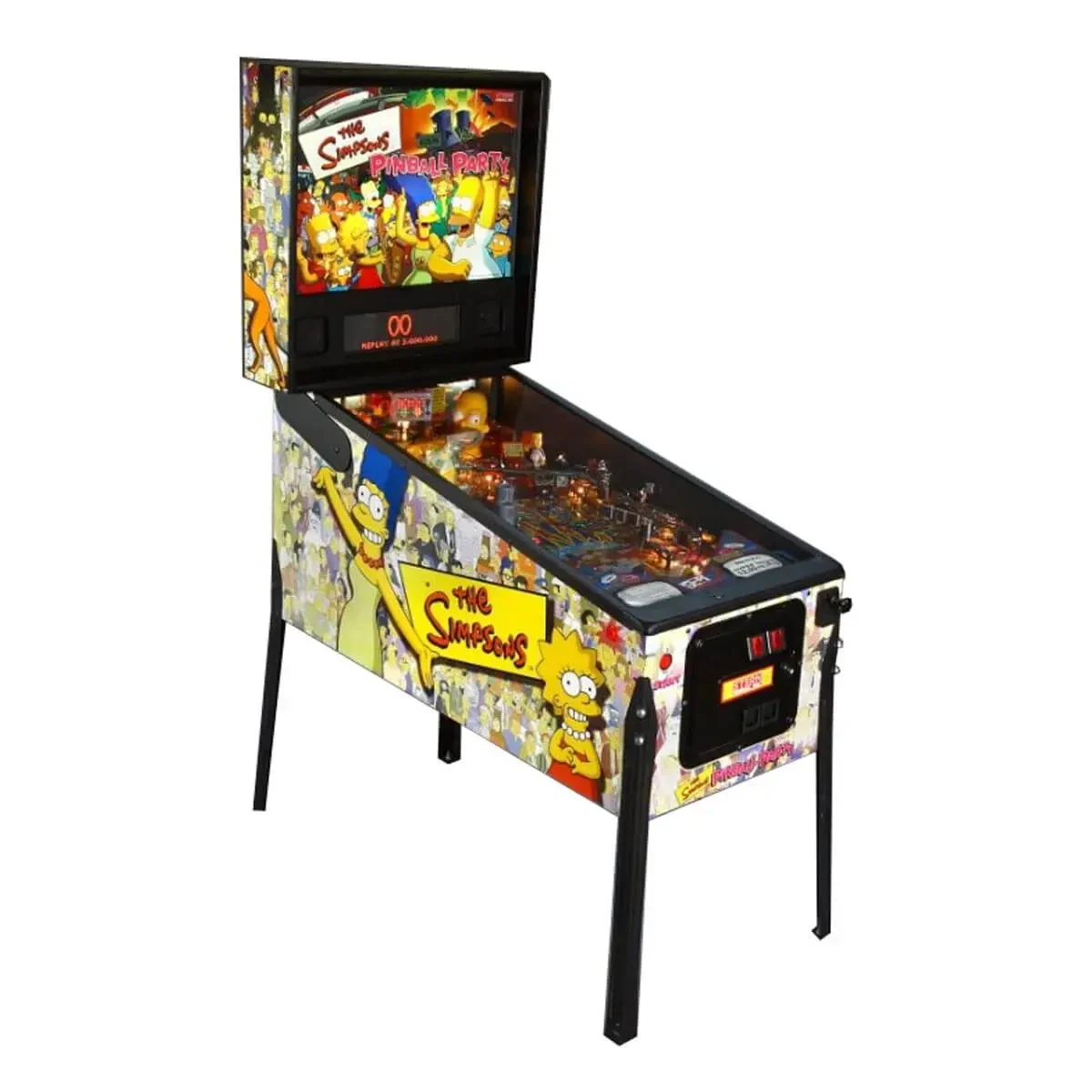
The 2003 Simpsons Pinball Party represents Stern's successful transition from the Sega era, featuring colorful artwork that perfectly captures the animated series' visual style. The playfield incorporates numerous sculpted elements including the famous Simpson family couch, Moe's Tavern, and the Springfield Nuclear Plant cooling towers. Cabinet artwork showcases the entire Simpson cast in vibrant colors that have maintained their appeal over two decades of production.
Construction quality reflects Stern's established manufacturing standards with solid plywood cabinets, professional wiring harnesses, and reliable flipper mechanisms. The dot matrix display provides clear game information and animations, while the sound system delivers authentic voice clips from the TV show's original cast members. Playfield components include multiple ramps, a captive ball feature, and the innovative TV couch mechanism that physically moves during gameplay. The overall design aesthetic successfully translates the Simpson universe into pinball form without feeling gimmicky or overly complex.
Simpsons Pinball Party excels in accessibility while maintaining enough depth to satisfy experienced players. The rule set revolves around completing various Simpson family member modes, each featuring different objectives and multiball sequences. Homer's mode focuses on beer collection and Duff brewery targets, while Bart's skateboard mode emphasizes ramp shots and combo building. Lisa's mode incorporates jazz music themes with specific rhythm-based shooting requirements.
The TV couch feature serves as the central multiball lock mechanism, with balls physically rolling into the couch before launching into play. Multiple multiball modes provide exciting ball-in-play action, while the nuclear plant meltdown sequence creates dramatic gameplay climax moments. Shot variety includes both precision targeting and flowing ramp sequences, accommodating different player skill levels and preferences. The humor and character voices maintain engagement throughout extended play sessions, making this machine particularly family-friendly.
Twenty-plus years of production history provides extensive maintenance knowledge and parts availability for Simpsons machines. The dot matrix display technology, while older than modern LCD systems, offers proven reliability and straightforward replacement procedures when necessary. Mechanical components like the TV couch mechanism require periodic lubrication and adjustment but generally operate reliably with proper maintenance.
Common service items include flipper rebuilds, rubber ring replacement, and occasional switch cleaning, all standard procedures for machines of this era. The solid-state electronics system provides good diagnostic capabilities for troubleshooting, while the established collector base ensures aftermarket parts availability. Expected maintenance costs align with other early 2000s Stern machines, making this a reasonable choice for home operators comfortable with basic pinball maintenance procedures.
Simpson fans represent the core audience, particularly collectors seeking machines based on beloved entertainment properties. The family-friendly theme and accessible gameplay make this ideal for households with children who enjoy the TV show. Casual players appreciate the straightforward rules and humorous content, while the multiball features provide enough excitement for more serious pinball enthusiasts.
Current market pricing in the $4,000-$6,000 range positions this machine competitively for buyers seeking proven entertainment value without premium new machine costs. Operators of commercial locations find the Simpson theme draws consistent player interest, while home collectors value the combination of nostalgic appeal and solid gameplay mechanics that ensure long-term enjoyment.
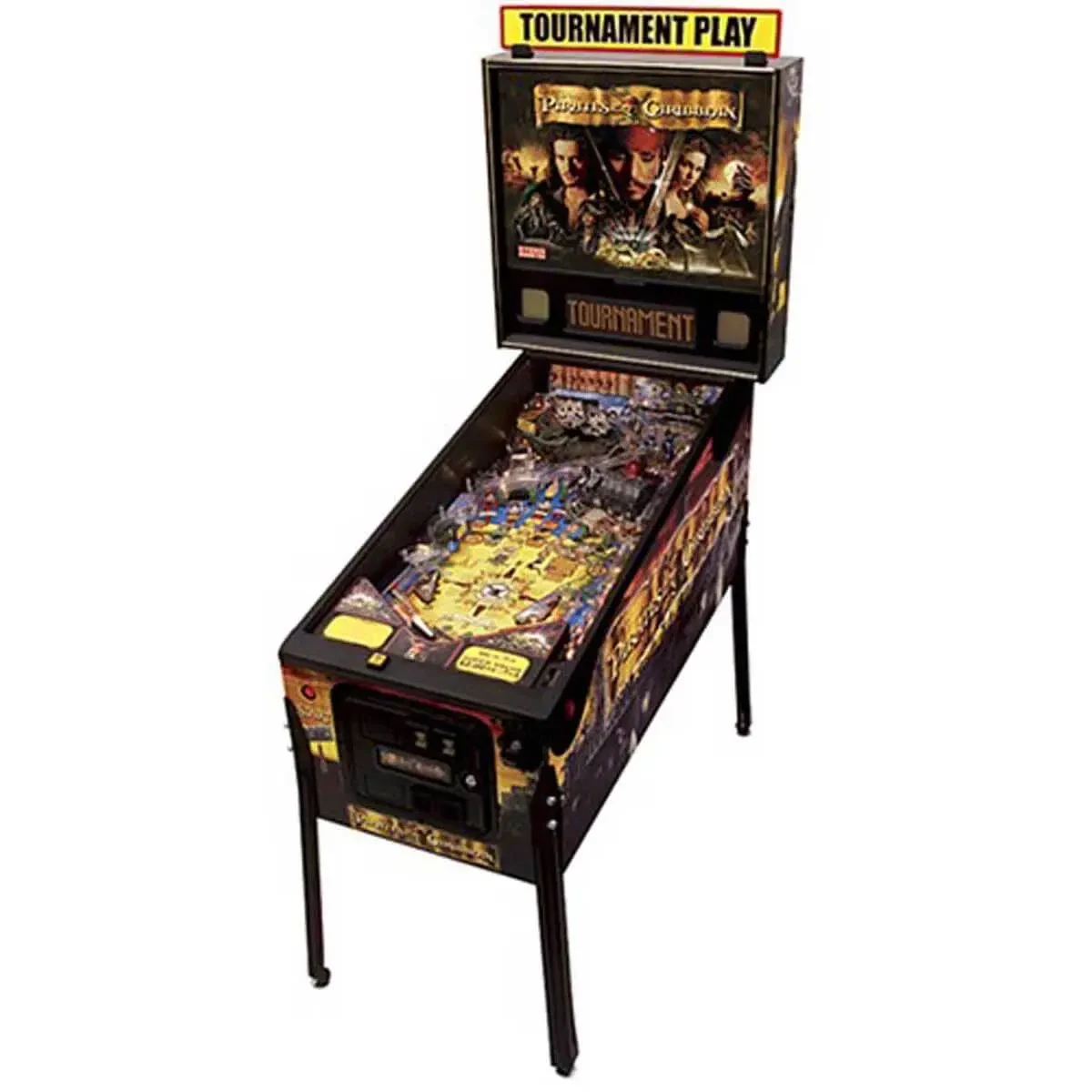
Released in 2006 during the height of the Pirates movie franchise popularity, this Stern machine captures the swashbuckling adventure through detailed playfield artwork and sculpted ship elements. The centerpiece pirate ship feature dominates the upper playfield, complete with moving parts and treasure chest ball locks. Cabinet artwork features Johnny Depp's Jack Sparrow and other movie characters in dynamic action poses that complement the adventure theme effectively.
Construction follows Stern's mid-2000s standards with solid cabinet materials, reliable electronics, and well-engineered mechanical features. The playfield layout incorporates multiple levels and ramps that create a sense of naval adventure, while the ship's cannon mechanism provides a unique ball launching feature. Dot matrix display animations coordinate with gameplay events, showing movie clips and custom animations that enhance the pirate atmosphere. Overall build quality reflects Stern's mature manufacturing processes during this period, resulting in machines that have aged well with proper care.
Pirates gameplay centers around adventure progression through various Caribbean locations and encounters with movie characters. Players navigate through different islands and sea battles, with each location offering unique objectives and scoring opportunities. The ship feature serves multiple functions including ball locks, target practice, and dramatic multiball launches that simulate cannon fire during naval battles.
Rule complexity falls between casual and expert levels, providing enough depth for serious players while remaining accessible to newcomers. Multiple multiball modes represent different movie scenes, from sword fights to treasure hunts, each requiring different shooting strategies. The adventure theme translates well into pinball mechanics, with progression systems that encourage exploration of different playfield areas and shot combinations. Voice clips from the movies enhance immersion, while the mechanical ship movements add visual excitement during key gameplay moments.
Nearly two decades of service history provides comprehensive maintenance knowledge for Pirates machines, with most common issues well-documented in pinball communities. The ship mechanism requires periodic lubrication and adjustment to maintain smooth operation, while the multiple ramps benefit from regular cleaning to ensure proper ball flow. Electronic systems from this era offer good reliability with straightforward diagnostic capabilities.
Parts availability remains strong through Stern's continued support and aftermarket suppliers, though some specific ship mechanism components may require more specialized sourcing. The dot matrix display technology provides proven longevity, while the overall mechanical complexity falls within manageable ranges for home operators. Expected maintenance intervals align with other mid-2000s Stern machines, requiring standard flipper service, rubber replacement, and periodic cleaning to maintain optimal performance.
Movie fans, particularly those who enjoyed the Pirates franchise during its peak popularity, find this machine offers nostalgic entertainment value. The adventure theme appeals to players seeking narrative-driven gameplay rather than abstract scoring objectives. Families appreciate the swashbuckling theme that engages both adults and children, while the moderate rule complexity accommodates various skill levels.
Current market positioning in the $3,500-$5,500 range makes this an attractive entry point for buyers seeking movie-themed machines without premium pricing. Commercial operators value the broad appeal of the pirate theme, while home collectors appreciate the combination of solid gameplay mechanics and distinctive visual features that create memorable gaming experiences for guests and family members.
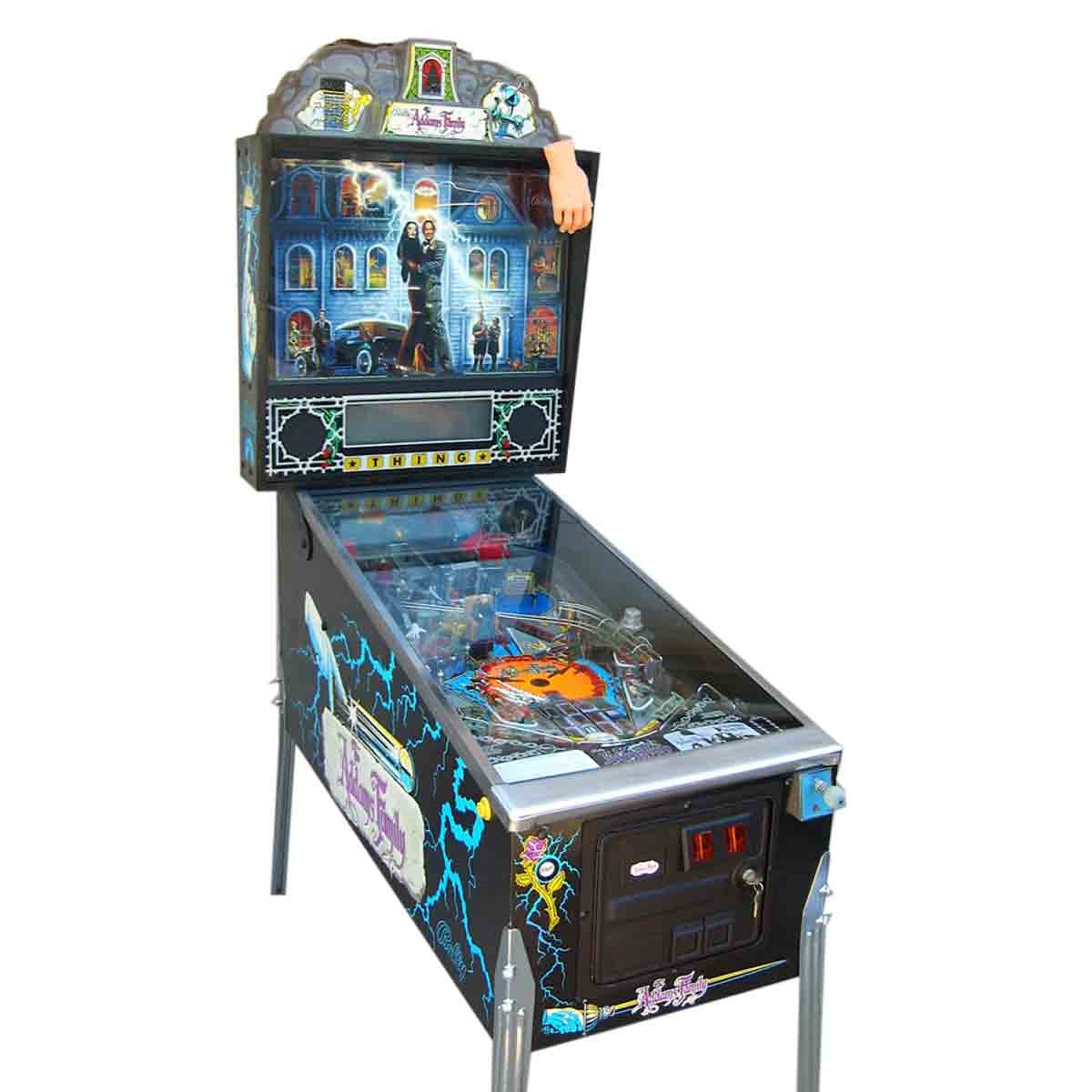
The 1992 Addams Family represents the pinnacle of Bally Williams engineering during pinball's golden age, featuring construction quality that has become legendary among collectors. The playfield showcases intricate artwork depicting the Addams mansion with multiple levels, secret passages, and the famous bookcase entrance. Cabinet artwork captures the movie's gothic atmosphere while maintaining the playful humor that made the franchise beloved across generations.
Build quality exceeds most modern machines through meticulous attention to detail in both mechanical and electronic components. The dot matrix display system pioneered many animation techniques still used today, while the sound system delivers crystal-clear voice clips and musical themes. Playfield components include the innovative magnetic "Thing" flipper, motorized bookcase, and electric chair that create mechanical interactions impossible to replicate with modern cost constraints. The overall construction represents an era when manufacturers prioritized long-term durability over production efficiency.
Addams Family gameplay revolves around exploring the mansion's rooms through precise shot-making and strategic progression. The central mansion feature requires players to complete specific shot sequences to unlock different rooms, each offering unique scoring opportunities and mini-games. The "Thing Flips" magnetic feature creates unpredictable ball movement that adds excitement while requiring quick reflexes and adaptive strategies.
Rule depth satisfies both casual players and tournament competitors, with multiple skill shots, combo multipliers, and the challenging "Tour the Mansion" wizard mode that demands mastery of every playfield feature. The bear kick target, swamp ramp, and electric chair each contribute to the mansion exploration theme while providing varied shooting challenges. Multiball modes include "Seance" and "Mamushka," each featuring different objectives and ball-saving opportunities that reward both accuracy and quick decision-making.
Three decades of service history provides unmatched maintenance knowledge and parts availability through both official and aftermarket sources. The robust Bally Williams electronics system offers excellent diagnostic capabilities and proven longevity, while mechanical components benefit from over-engineering that prioritized durability. Common maintenance items include flipper rebuilds, rubber replacement, and periodic cleaning of the complex playfield features.
The magnetic "Thing" mechanism requires occasional adjustment but generally operates reliably with proper care, while the motorized bookcase benefits from periodic lubrication and belt replacement. Parts availability remains excellent through specialized suppliers and the active collector community, ensuring long-term serviceability. The machine's reputation for reliability makes it an ideal choice for operators seeking minimal maintenance requirements while delivering consistent entertainment value.
Serious collectors recognize Addams Family as the holy grail of pinball ownership, combining historical significance, exceptional gameplay, and proven investment value. Tournament players appreciate the skill-based gameplay mechanics and strategic depth that reward practice and mastery. The movie tie-in appeals to fans of the franchise while the gothic humor engages players across multiple generations.
Current market pricing reflects the machine's legendary status, with quality examples commanding $4,500-$7,500 depending on condition and restoration level. This represents both the highest entry cost and strongest resale potential among our comparison machines. Home operators seeking a centerpiece machine that impresses guests and provides long-term entertainment value find Addams Family delivers unmatched prestige and gameplay satisfaction that justifies the premium investment.
Dungeons & Dragons achieves unprecedented authenticity by incorporating actual D&D mechanics including character classes, spell systems, and campaign progression that mirror tabletop gameplay. The collaboration with Wizards of the Coast ensures canonical accuracy while Brian Eddy's design translates complex RPG concepts into accessible pinball mechanics. Voice acting from Critical Role cast members and D&D luminaries adds legitimacy that resonates with the core fanbase.
Addams Family benefits from perfect timing, releasing during peak movie popularity with official licensing that captured the gothic humor flawlessly. The mansion exploration theme translates naturally into pinball progression mechanics, while movie voice clips and musical themes create immersive atmosphere. Simpsons leverages the TV show's established characters and humor effectively, though the theme integration feels less cohesive than movie-based properties. Pirates captures the adventure elements well but relies heavily on visual spectacle rather than deep thematic integration.
Winner: Dungeons & Dragons for revolutionary authenticity, followed closely by Addams Family's timeless movie integration.
The Tyrant's Eye provides virtually unlimited replay value through character class selection, skill tree progression, and campaign modes that change based on player choices. Each game session offers different experiences depending on character selection and strategic decisions, creating the pinball equivalent of tabletop RPG campaigns. The three-flipper layout adds mechanical variety that keeps gameplay fresh even after extended play sessions.
Addams Family maintains engagement through perfectly balanced difficulty progression and the iconic "Tour the Mansion" wizard mode that challenges players for years. The magnetic "Thing" feature creates unpredictable moments that prevent gameplay from becoming routine, while the mansion room exploration provides clear progression goals. Simpsons offers solid family entertainment with humor that remains engaging, though rule depth limits long-term challenge for serious players. Pirates provides adventure-themed excitement but lacks the mechanical innovation or rule complexity for sustained engagement.
Winner: Dungeons & Dragons for infinite variability, with Addams Family close behind for timeless balance.
All four machines share identical cabinet dimensions at approximately 27" wide, 55" deep, and 75.5" tall, requiring similar floor space and clearance for gameplay. Weight varies from 250-300 pounds depending on specific features and construction materials. Standard electrical requirements include 120V AC power with dedicated circuits recommended for optimal performance.
Setup complexity differs primarily in electronic configuration and software initialization. Modern Stern machines like Dungeons & Dragons benefit from simplified setup procedures and diagnostic systems, while older machines may require more extensive initial adjustments. All machines require level placement and periodic releveling as buildings settle over time. Access requirements for maintenance favor newer machines with improved component accessibility.
Winner: Tie—all machines require identical space with minor setup variations.
Addams Family demonstrates exceptional investment performance with consistent appreciation over three decades, making it the gold standard for pinball collecting. Quality examples have tripled in value since 2000, with no indication of declining demand. The combination of historical significance, limited production relative to demand, and timeless gameplay ensures continued appreciation.
Dungeons & Dragons represents unknown investment potential as a 2025 release, though Stern's recent cornerstone titles have shown strong resale performance. The D&D license and innovative features suggest collector interest, but market performance requires time to establish. Simpsons maintains steady value with moderate appreciation, appealing to both players and collectors. Pirates offers the most accessible entry point but shows limited appreciation potential compared to more iconic titles.
Winner: Addams Family for proven investment performance, with Pirates offering best immediate value for entertainment dollar.
Our comprehensive analysis reveals distinct winners for different buyer profiles based on priorities, budget, and intended use. Each machine excels in specific areas while presenting unique value propositions that serve different collector and player needs.
For D&D fans and technology enthusiasts: Dungeons & Dragons: The Tyrant's Eye Pro wins decisively with revolutionary rule integration, cutting-edge features, and unlimited replay value through character progression systems. The $6,999 investment delivers unprecedented authenticity and innovation that justifies premium pricing for dedicated fans.
For serious collectors and investors: Addams Family remains the gold standard with proven appreciation, legendary status, and exceptional gameplay that has captivated players for three decades. Despite higher entry costs, the combination of historical significance and investment performance makes this the clear choice for long-term value.
For families and casual players: Simpsons Pinball Party provides the ideal balance of accessible gameplay, humor, and moderate pricing. The family-friendly theme and straightforward rules create lasting entertainment without overwhelming complexity or premium investment requirements.
For budget-conscious buyers: Pirates of the Caribbean offers the most entertainment value per dollar with adventure themes, impressive visual features, and competitive pricing in the $3,500-$5,500 range. This represents the best entry point for experiencing quality Stern pinball without premium costs.
Total Points Tally:
Addams Family demonstrates the strongest value retention and appreciation among pinball machines, with quality examples tripling in price since 2000. The combination of being the best-selling machine ever produced, exceptional Bally Williams build quality, and timeless gameplay creates sustained collector demand. Classic Williams/Bally machines from the 1990s golden era generally outperform modern Stern machines for investment purposes, though recent Stern cornerstone titles like Metallica and Led Zeppelin show promising appreciation trends.
Standard pinball machines require approximately 8 feet by 4 feet of floor space, accounting for the machine dimensions plus player clearance. Ceiling height needs minimum 7 feet for comfortable play, though 8+ feet prevents feeling cramped during enthusiastic gameplay. Additional considerations include access space for maintenance (3+ feet behind the machine), electrical outlet placement, and door clearance for delivery. Many home installations benefit from dedicated game room spaces rather than attempting to fit machines into living areas where space constraints limit enjoyment.
Annual maintenance costs typically range from $200-500 for home use machines, depending on play frequency and machine age. Major expenses include flipper rebuilds every 2-3 years ($150-250), rubber ring replacement annually ($50-100), and periodic electronic component replacement ($100-300). Professional servicing costs $75-125 per hour when needed, though many owners learn basic maintenance procedures. Modern Stern machines generally require less maintenance than 1990s era machines, while proper preventive care significantly reduces unexpected repair costs and extends machine lifespan.
First-time buyers often benefit more from quality used machines that offer proven gameplay and established market values. Used machines allow buyers to experience different eras and manufacturers without new machine depreciation, while providing opportunities to learn maintenance skills on less expensive investments. However, new machines offer warranty coverage, latest features, and known condition that eliminates uncertainty about previous care and modifications. Budget typically determines the decision, with used machines offering significantly more entertainment value per dollar for buyers willing to accept some mechanical risk and learning curve.