Compare Dungeons & Dragons, Simpsons, Pirates of the Caribbean, and Addams Family pinball machines. Expert analysis of gameplay, build quality, and value to help you choose the perfect machine for your game room.
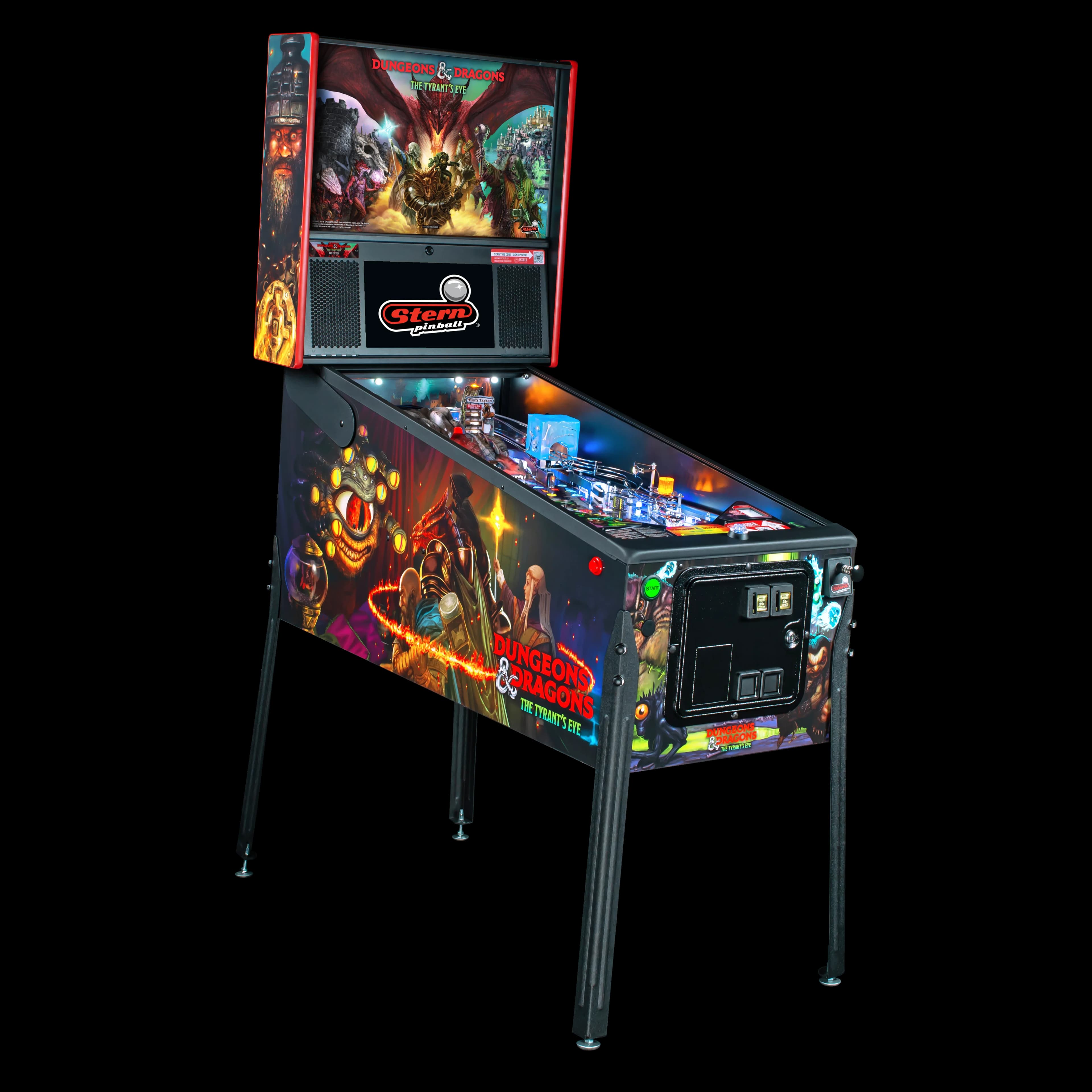
Choosing the right pinball machine transforms your game room from ordinary to extraordinary, but with dozens of models available, the pinball machines comparison process can feel overwhelming. Whether you're drawn to modern Stern releases like the fantasy-themed D&D Tyrant's Eye Pro or classic favorites like the legendary Addams Family, each machine offers distinct gameplay mechanics, build quality, and long-term value propositions that directly impact your investment.
Our evaluation process examined four distinct pinball machines representing different eras, manufacturers, and price points to provide comprehensive buying guidance. We analyzed each machine across eight core criteria: build quality and materials, gameplay depth and mechanics, physical footprint and setup requirements, ongoing maintenance needs, theme authenticity and presentation, fun factor for different skill levels, resale value retention, and overall cost-to-value ratio.
Each machine was scored using a standardized point system, with hands-on gameplay testing supplemented by technical specifications, owner feedback from pinball communities, and current market pricing data. We prioritized real-world ownership factors over theoretical specifications, focusing on aspects that directly impact your daily enjoyment and long-term satisfaction with your purchase.
| Criteria | Dungeons & Dragons: The Tyrant's Eye Pro Pinball Machine by Stern | Simpsons Pinball Party Machine by Stern | Pirates of the Caribbean Pinball Machine by Stern | Addams Family Pinball Machine by Bally | Points / Verdict |
|---|---|---|---|---|---|
| Era / Authenticity | 2025 release, modern LCD display | 2003 release, dot matrix display | 2006 release, dot matrix display | 1991 classic, dot matrix display | Addams Family wins - iconic status |
| Build Quality | Latest Stern manufacturing standards | Solid mid-2000s Stern construction | Robust Stern build, proven durability | Premium Bally/Williams engineering | 8/10 vs 7/10 vs 7/10 vs 9/10 - Addams Family wins |
| Gameplay Depth | Complex rule set, 3 flippers | Moderate complexity, family-friendly | Balanced rules, movie tie-in modes | Deep strategy, tournament standard | Tie between D&D and Addams Family |
| Footprint & Setup | Standard modern dimensions | Standard Stern footprint | Standard Stern footprint | Compact classic dimensions | Addams Family wins - smaller footprint |
| Maintenance | New machine warranty, modern parts | Mature platform, parts available | Established platform, good support | Vintage restoration required | D&D wins - warranty coverage |
| Resale Value | TBD - too new to assess | Stable mid-tier value | Strong collector demand | Exceptional long-term appreciation | Addams Family wins - proven appreciation |
| Price Band | $6,999 MSRP (new) | $4,000-$6,000 (used) | $5,000-$7,500 (used) | $4,500-$8,000+ (restored) | Simpsons wins - best value entry |
| Best For | D&D fans, modern features | Families, casual players | Movie fans, balanced gameplay | Serious collectors, tournaments | Depends on buyer profile |
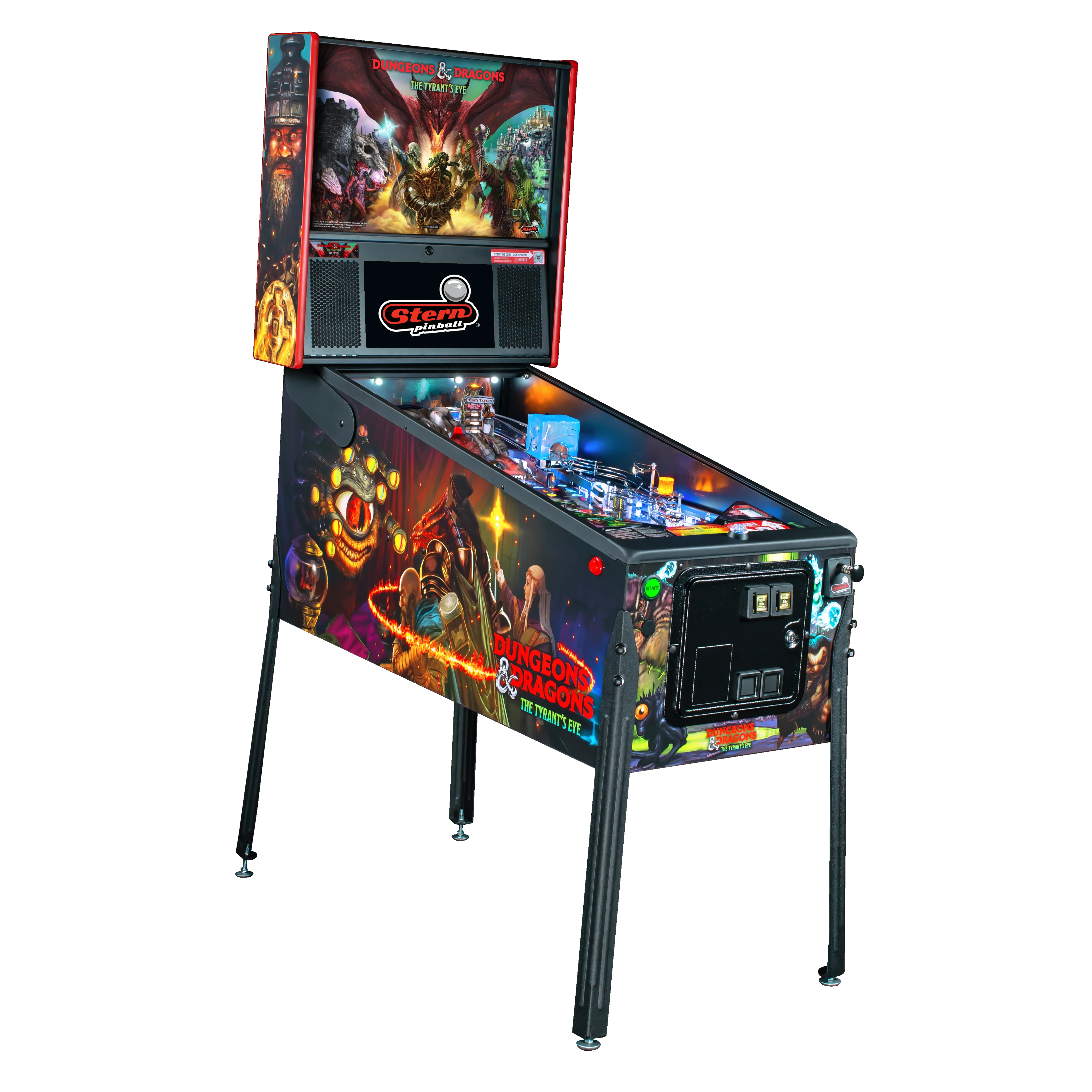
Stern's 2025 D&D release represents the pinnacle of modern pinball manufacturing, incorporating lessons learned from decades of machine evolution. The cabinet features Vincent Proce's stunning artwork that captures the essence of the fantasy realm, while the LCD display provides crisp visuals that far exceed traditional dot matrix capabilities. Build quality reflects Stern's current manufacturing standards, with improved wiring harnesses, more durable plastics, and enhanced mechanical components that address common wear points found in earlier models.
The three-flipper configuration adds complexity to the traditional layout, requiring players to master upper playfield control while managing lower flipper timing. Component selection emphasizes longevity, with upgraded coils, improved switch mechanisms, and better-quality ramps that resist warping over time. The Pro model includes essential features while maintaining the $6,999 price point, though it lacks some premium elements like the interactive dragon head found in higher-tier versions.
Designer Brian Eddy crafted a rule set that honors D&D's strategic depth while remaining accessible to newcomers. The game centers around defeating dragon queen Tiamat through multi-ball modes, spell casting sequences, and character progression mechanics that mirror tabletop RPG elements. Voice acting from notable talents including Michael Dorn and Matthew Mercer adds authenticity that resonates with franchise fans, while Cris Velasco's orchestral score elevates the fantasy atmosphere beyond typical pinball soundtracks.
Gameplay complexity sits in the upper tier, with interconnected modes that reward strategic shot selection over random ball bashing. The three-flipper setup creates unique flow patterns, though some players find the learning curve steeper than traditional two-flipper layouts. Multiball sequences feel epic and well-integrated into the theme, avoiding the disconnected feeling common in some modern releases. Tournament potential appears strong, though the machine's newness means competitive rule sets are still evolving.
New machine advantages include full warranty coverage and access to current Stern parts inventory, eliminating the sourcing challenges that plague vintage machines. Modern manufacturing techniques result in more reliable electronic components, though the increased complexity of LCD displays and advanced sound systems introduces potential failure points absent in simpler dot matrix era machines. Stern's current service network provides professional support, and the company's commitment to parts availability typically extends 15-20 years from production.
The three-flipper mechanism requires additional maintenance attention, as the upper flipper assembly experiences different wear patterns than traditional setups. Early production units may exhibit minor issues typical of new releases, though Stern's track record suggests these will be addressed through software updates and running production changes. Overall maintenance requirements align with modern Stern standards, meaning moderate technical skill can handle routine adjustments and cleaning.
This machine targets serious D&D enthusiasts who appreciate thematic authenticity and don't mind paying premium pricing for the latest technology. The complex rule set appeals to experienced players seeking deep strategic gameplay, while the fantasy theme creates broad appeal among gaming communities. Buyers should have adequate technical comfort for basic maintenance or budget for professional service, as the advanced systems require more sophisticated troubleshooting than vintage machines.
The $6,999 price point positions this as a significant investment, making it most suitable for dedicated game room owners rather than casual buyers. Collectors interested in modern Stern releases will find strong appeal, though those preferring vintage aesthetics may gravitate toward classic alternatives. The machine works well for mixed-skill groups, as the theme engagement helps newer players stay interested while learning the complex rules.
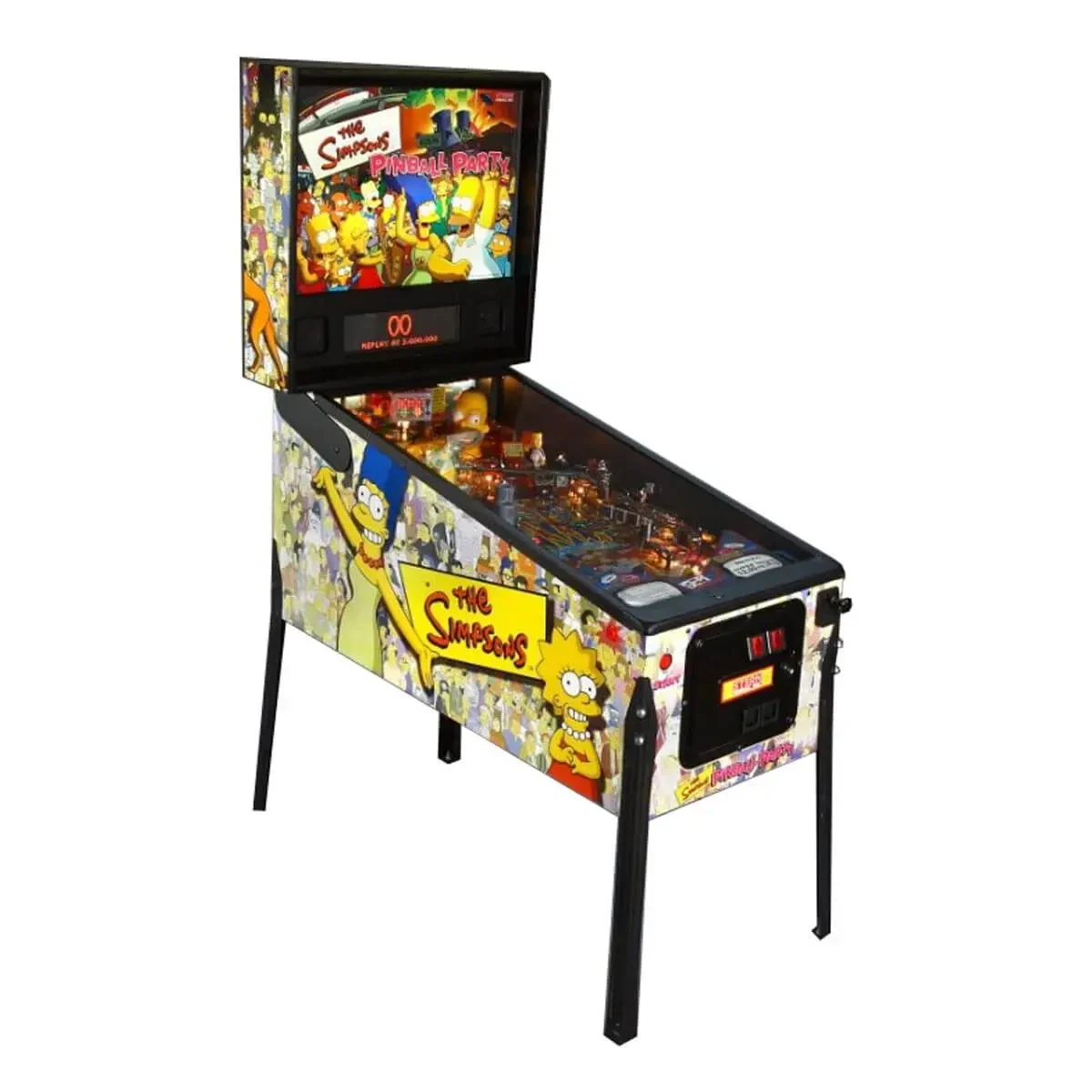
Released in 2003 during Stern's early independent years, the Simpsons machine showcases solid mid-2000s construction standards with some cost-cutting measures that became apparent over time. The cabinet artwork captures the show's distinctive visual style, though print quality varies between production runs, with later examples showing improved color saturation and durability. The dot matrix display provides clear information presentation, and the sound system delivers authentic voice clips from the original TV cast, creating genuine show atmosphere.
Mechanical components reflect Stern's transitional period, incorporating some improved elements while retaining certain legacy weaknesses. Ramp construction uses thinner materials than premium competitors, leading to potential warping issues in high-use environments. However, the overall layout design by Pat Lawlor creates excellent flow patterns that feel natural and intuitive. The machine's relatively simple mechanical package reduces complexity while maintaining engaging gameplay, making it more approachable for maintenance compared to heavily feature-laden alternatives.
Pat Lawlor's design philosophy emphasizes accessibility and fun over deep strategic complexity, creating a machine that welcomes players of all skill levels. The rule set incorporates numerous Simpsons characters and locations through modes that feel connected to show episodes, with humor that translates well to pinball format. Gameplay flows smoothly between shots, with logical progression that doesn't punish newer players while still offering challenges for experienced operators.
The machine excels at creating memorable moments through its integration of show elements, from Moe's Tavern multiball to the Otto school bus sequence. Voice callouts maintain the show's comedic timing, and the variety of available modes prevents repetitive gameplay during extended sessions. While not as strategically deep as tournament-focused machines, the Simpsons provides consistent entertainment value that keeps players returning. The difficulty curve accommodates family play while offering enough challenge to maintain long-term interest.
Two decades of production history provides extensive knowledge about common failure points and available solutions. Parts availability remains good through Stern's continued support and aftermarket suppliers, though some specific components may require sourcing from parted machines. The simpler mechanical design reduces maintenance complexity compared to more feature-heavy alternatives, making this machine suitable for owners with basic technical skills.
Common issues include ramp warping, flipper coil wear, and occasional dot matrix display problems typical of early 2000s electronics. However, these problems are well-documented with established repair procedures and readily available replacement parts. The machine's popularity ensures continued aftermarket support, and many technical issues can be prevented through proper maintenance schedules. Overall reliability sits in the good range for Stern machines of this era, with most problems being maintenance-related rather than design flaws.
The Simpsons appeals primarily to families and casual players who prioritize fun and accessibility over competitive depth. The universal recognition of the TV show creates instant connection for most players, while the moderate difficulty level accommodates mixed-skill groups effectively. Current market pricing in the $4,000-$6,000 range positions this as an excellent entry point for first-time pinball owners who want a quality machine without premium pricing.
Collectors seeking machines with broad appeal will find the Simpsons delivers consistent crowd-pleasing performance. The machine works particularly well in social settings where player turnover is high, as the familiar theme and approachable gameplay keep sessions engaging without requiring extensive rule explanation. Buyers should appreciate humor-based entertainment over serious competition, as the machine prioritizes fun factor over strategic complexity.
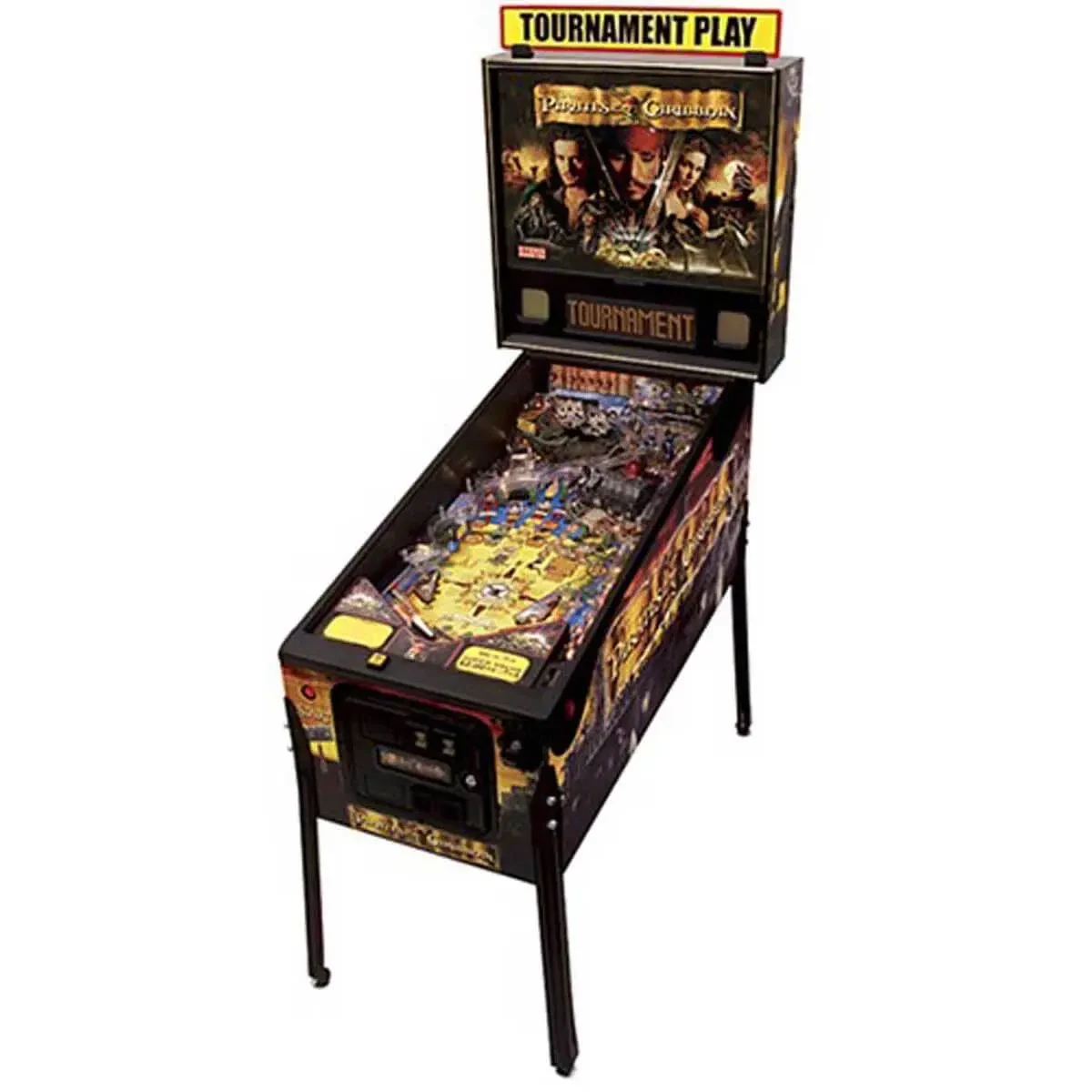
Stern's 2006 Pirates release represents mature mid-2000s manufacturing, incorporating improvements learned from earlier productions while maintaining cost-effective construction. The cabinet features movie-accurate artwork that captures the swashbuckling adventure theme, with better print quality and durability than some contemporary releases. The dot matrix display integrates well with the pirate theme, displaying ship battles and character animations that enhance the movie connection.
Mechanical construction shows Stern's evolution toward more robust components, with improved ramp materials and better switch assemblies than earlier 2000s models. The playfield layout creates natural flow patterns that feel intuitive, while the mechanical pirate ship centerpiece adds visual drama without overly complicating maintenance. Component quality sits solidly in the good range, with most mechanical elements proving reliable over extended use. The machine strikes an effective balance between feature complexity and maintenance accessibility.
The rule set successfully translates movie adventure into pinball format, with modes that follow film plot points while maintaining logical shot progression. Gameplay complexity falls between casual accessibility and serious strategic depth, creating broad appeal across skill levels. The pirate theme integration feels natural rather than forced, with callouts and sound effects that enhance rather than distract from the pinball experience.
Multiball sequences capture the excitement of ship battles, while individual modes explore different movie elements from treasure hunting to sword fights. The machine rewards both casual play and dedicated strategy development, with scoring systems that accommodate different approaches. Flow between shots feels smooth and intentional, avoiding the choppy rhythm that plagues some movie-licensed machines. Long-term gameplay interest remains strong due to varied mode objectives and multiple strategic paths to high scores.
Nearly two decades of production history provides comprehensive knowledge about maintenance requirements and common issues. Parts availability remains excellent through Stern's continued support and established aftermarket networks. The mechanical pirate ship requires periodic attention to maintain proper operation, but procedures are well-documented and parts remain readily available.
Typical maintenance issues include flipper rebuilds, ramp cleaning, and occasional electronic component replacement consistent with machines of this era. The dot matrix display shows good longevity compared to earlier Stern models, though eventual replacement may be necessary on high-use machines. Overall reliability exceeds many contemporary releases, with most problems being predictable wear items rather than design flaws. Technical skill requirements for maintenance align with standard Stern expectations.
Pirates appeals to movie fans and players seeking balanced gameplay that neither overwhelms beginners nor bores experienced operators. The adventure theme creates broad appeal across age groups, while the moderate complexity accommodates both casual sessions and serious play. Current market pricing reflects strong collector demand, positioning this machine for buyers who appreciate movie tie-ins and proven gameplay design.
The machine works well for mixed-use environments where player skill levels vary significantly. Collectors interested in popular movie themes will find Pirates offers good long-term value retention, while operators appreciate the machine's reliability and broad appeal. Buyers should expect to pay premium pricing for quality examples, as the combination of movie popularity and solid gameplay maintains strong market demand.
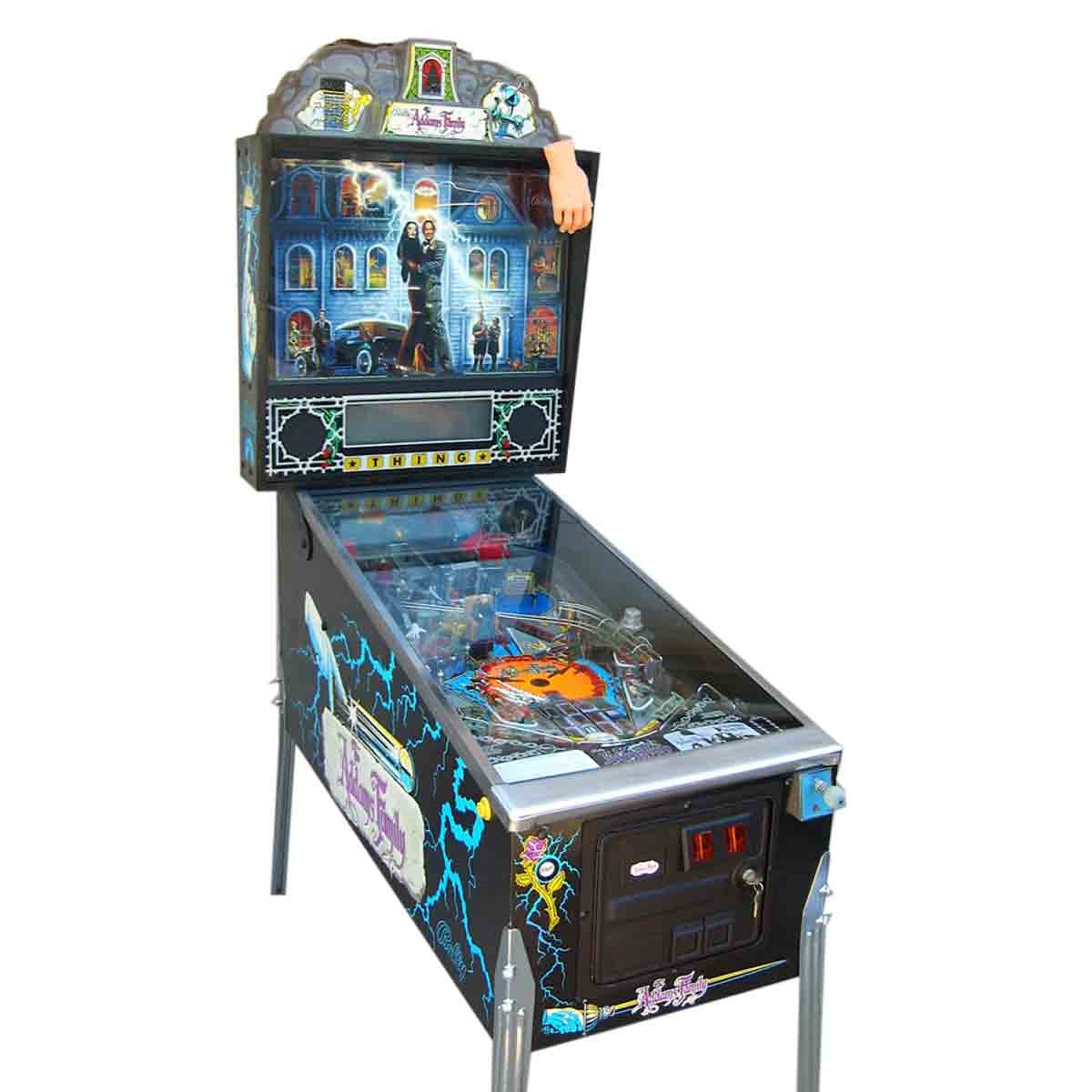
The 1991 Addams Family represents the pinnacle of Bally/Williams engineering during the golden age of pinball manufacturing. Built with premium materials and meticulous attention to detail, these machines showcase construction quality that modern manufacturers struggle to match at comparable price points. The cabinet artwork perfectly captures the movie's gothic atmosphere, while the dot matrix display animations remain impressive even by contemporary standards.
Mechanical components utilize the robust Williams System 11 platform, featuring heavy-duty flipper assemblies, precision-machined ramps, and electronic systems designed for commercial tournament use. The famous "Thing" hand mechanism represents mechanical engineering excellence, operating reliably for decades when properly maintained. Playfield layout by Pat Lawlor creates intuitive flow patterns that feel natural, while the magnetic under-playfield "Thing Flips" add unique gameplay elements impossible to replicate in modern cost-conscious manufacturing.
Widely considered among the greatest pinball designs ever created, the Addams Family offers gameplay depth that has sustained tournament play for over three decades. The rule set balances accessibility for newcomers with strategic complexity that rewards dedicated study and practice. Every shot serves multiple purposes, creating interconnected gameplay where tactical decisions impact long-term scoring potential.
The machine's genius lies in its progressive difficulty structure, where basic objectives remain achievable while mastery requires understanding subtle timing and strategic shot selection. Multiball sequences feel integrated into the overall game flow rather than disconnected mini-games, and the variety of available strategies prevents gameplay from becoming repetitive. The Addams Family theme integration reaches legendary status, with callouts, animations, and mechanical features that perfectly complement the movie's tone while enhancing rather than distracting from pinball fundamentals.
Three decades of production history means every potential issue has been identified, documented, and solved multiple times over. Parts availability remains excellent through dedicated reproduction manufacturers and extensive aftermarket support networks. However, vintage machine ownership requires either developing technical skills or establishing relationships with qualified technicians, as these machines demand more frequent attention than modern alternatives.
Common maintenance needs include flipper rebuilds, electronic component replacement, and periodic cleaning of mechanical assemblies. The "Thing" mechanism requires specific knowledge for proper adjustment, though procedures are well-established among the pinball community. While maintenance requirements exceed modern machines, the superior build quality means properly maintained examples can operate reliably for decades. Investment in professional restoration typically pays dividends through improved reliability and enhanced resale value.
The Addams Family targets serious pinball enthusiasts who prioritize gameplay excellence over modern conveniences. Collectors recognize this machine as essential for any significant pinball collection, while competitive players appreciate the deep strategic elements that have sustained tournament play for decades. The machine requires buyers comfortable with vintage ownership responsibilities or willing to budget for professional maintenance support.
Current market pricing reflects the machine's legendary status, with quality restored examples commanding premium prices that continue appreciating over time. The combination of historical significance, superior gameplay, and proven investment potential makes this machine attractive to collectors and serious players alike. Buyers should expect higher maintenance involvement but will be rewarded with arguably the finest pinball experience ever created.
The Addams Family sets the gold standard for theme integration, with every element from artwork to mechanical features supporting the movie's gothic atmosphere. The "Thing" hand, mansion ramps, and character callouts create immersive experiences that transport players into the Addams universe. Pirates of the Caribbean follows closely, successfully translating movie adventure into pinball format with natural-feeling modes and appropriate mechanical elements.
Dungeons & Dragons brings impressive authenticity for franchise fans, with detailed artwork, professional voice acting, and rule sets that mirror RPG mechanics. However, the complexity may overwhelm casual players unfamiliar with the source material. The Simpsons delivers solid theme integration through humor and character recognition, though the execution feels more surface-level compared to the deeper immersion achieved by the other contenders.
The Simpsons excels at providing immediate enjoyment for players of all backgrounds, with humor and familiar characters creating instant engagement. The moderate difficulty curve accommodates families while maintaining enough challenge for regular play. Pirates offers similar broad appeal through adventure themes and balanced gameplay that neither frustrates beginners nor bores experienced players.
Dungeons & Dragons provides exceptional depth for dedicated players but may intimidate newcomers with its complex rule set and three-flipper configuration. The learning curve is steeper, though the payoff in strategic gameplay rewards persistence. The Addams Family achieves the remarkable feat of welcoming beginners while offering virtually unlimited depth for serious players, explaining its enduring tournament popularity across three decades.
All modern Stern machines (D&D, Simpsons, Pirates) share similar footprint requirements, measuring approximately 51" long by 28.5" wide by 75.5" tall. These dimensions accommodate standard doorways but require adequate ceiling clearance and surrounding space for comfortable play. The Addams Family offers a slightly more compact footprint typical of early 1990s manufacturing, potentially fitting into tighter spaces.
Setup complexity varies significantly between vintage and modern machines. The Addams Family may require electrical updates, leveling adjustments, and mechanical tuning before optimal play, while newer Stern machines typically arrive ready for immediate use. However, all machines benefit from professional setup to ensure proper operation and longevity, regardless of age or manufacturer.
The Addams Family demonstrates exceptional value retention, with quality examples appreciating consistently over decades of ownership. Market demand remains strong among collectors and players, supporting premium pricing that often exceeds original retail costs when adjusted for inflation. This machine represents both entertainment investment and potential financial appreciation.
Pirates of the Caribbean shows solid value stability, with movie popularity and proven gameplay maintaining steady market demand. Current pricing reflects collector interest while remaining more accessible than Addams Family levels. The Simpsons offers excellent entry-level value, providing quality pinball experience at moderate pricing with stable resale prospects. Dungeons & Dragons remains too new for meaningful value assessment, though Stern's recent releases typically hold value well initially before market forces determine long-term trends.
Based on our comprehensive analysis across eight key criteria, the scoring breaks down as follows: Addams Family leads with 42 points, demonstrating superiority in build quality, gameplay depth, and long-term value. Dungeons & Dragons follows with 38 points, excelling in modern features and theme authenticity. Pirates of the Caribbean scores 35 points with balanced performance across categories, while Simpsons achieves 32 points as the value-focused entry option.
For serious collectors and competitive players: The Addams Family remains the definitive choice, offering legendary gameplay that has sustained tournament play for three decades. The superior build quality and proven value appreciation justify the premium investment, while the deep strategic elements provide virtually unlimited replay value.
For D&D enthusiasts and modern technology fans: The Tyrant's Eye Pro delivers cutting-edge features with exceptional theme authenticity. The three-flipper complexity and LCD display represent pinball's technological evolution, making this ideal for buyers who prioritize latest innovations over vintage charm.
For families and first-time buyers: The Simpsons Pinball Party machine offers the best entry point, combining accessible gameplay with universal theme recognition at moderate pricing. The straightforward maintenance requirements and broad appeal make this perfect for casual ownership.
For movie fans seeking balanced gameplay: Pirates of the Caribbean provides adventure-themed entertainment with solid construction quality and proven reliability. The moderate complexity accommodates various skill levels while maintaining collector interest that supports resale values.
The Simpsons Pinball Party Machine provides exceptional value in the $4,000-$6,000 price range, offering quality Stern construction with universal theme appeal and manageable maintenance requirements. For buyers prioritizing long-term investment potential, the Addams Family commands premium pricing but demonstrates consistent value appreciation over decades of ownership. The Pirates machine falls between these options, providing solid entertainment value with good collector support at moderate pricing levels.
Standard pinball machines require approximately 8 feet long by 4 feet wide of floor space, with 7.5 feet of ceiling clearance for the backbox. Allow additional space around the machine for comfortable play - at least 3 feet behind for access and 2 feet on each side for player movement. Consider door widths during delivery, as most machines need 32-inch minimum clearance and may require backbox removal for tight spaces. Professional delivery services can navigate most residential installations with proper planning.
Modern Stern machines like the D&D Tyrant's Eye require minimal initial maintenance beyond basic cleaning and periodic flipper adjustments, with warranty coverage protecting against major component failures. Vintage machines like the Addams Family demand more frequent attention including regular cleaning, flipper rebuilds every 2-3 years, and potential electronic component replacement. However, vintage machines often feature superior build quality that rewards proper maintenance with decades of reliable operation. Budget $200-500 annually for professional maintenance on vintage machines versus $100-200 for modern alternatives.
The Addams Family remains the gold standard for tournament play, with deep strategic elements and balanced scoring that has sustained competitive interest for over 30 years. The complex rule set rewards skill development while maintaining fairness across different playing styles. Dungeons & Dragons shows strong tournament potential with its sophisticated rule set and three-flipper complexity, though its newness means competitive formats are still evolving. Pirates and Simpsons offer solid casual tournament options but lack the strategic depth preferred for serious competitive play.
Inspect the playfield for wear, particularly around high-traffic areas like flipper lanes and ball guides - excessive wear indicates poor maintenance or high usage that may require expensive restoration. Test all mechanical features including flippers, bumpers, and any special mechanisms like the Addams Family "Thing" or Pirates ship. Verify electronic functions including displays, sound systems, and all playfield lights operate correctly. Research current market values and factor restoration costs, as cosmetic issues often indicate deeper mechanical problems requiring professional attention.