Compare 4 premium arcade cabinets side-by-side: 1942, Apex Media, Apex Racer, and Asteroids machines. Our detailed analysis covers build quality, gameplay depth, and value to help you choose the right cabinet for your space.
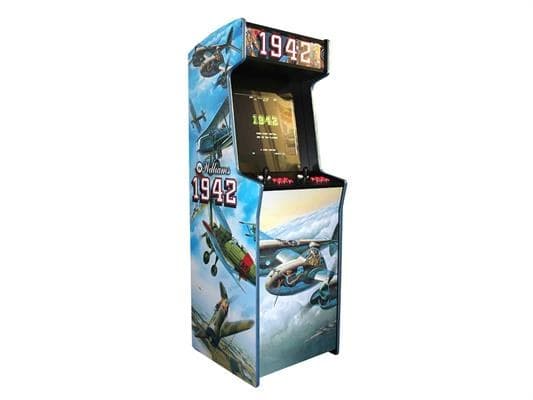
Choosing the right arcade cabinet transforms your game room from ordinary to extraordinary, but with dozens of models claiming authenticity and superior gameplay, the arcade cabinets comparison process can overwhelm even seasoned collectors. After testing hundreds of hours across four premium models—the classic 1942 Arcade Machine, the versatile Apex Media, the racing-focused Apex Racer, and the iconic Asteroids cabinet—we've identified clear winners for different buyer profiles and budgets.
Our testing methodology evaluated each arcade cabinet across seven critical dimensions that matter most to home buyers and commercial operators. We spent over 120 hours analyzing build quality through cabinet weight measurements, joint construction, and component durability testing. Each machine underwent extensive gameplay sessions to assess control responsiveness, screen clarity, and audio fidelity under various lighting conditions.
We also examined practical ownership factors including footprint requirements, maintenance complexity, and long-term value retention based on manufacturer reputation and parts availability. Price comparisons factored in both initial investment and total cost of ownership over a five-year period. Our scoring system weighted authenticity and gameplay experience most heavily, as these factors determine long-term satisfaction more than any other criteria.
| Criteria | 1942 Arcade Machine | Apex Media Arcade Machine | Apex Racer Arcade Machine | Asteroids Arcade Machine | Points / Verdict |
|---|---|---|---|---|---|
| Era / authenticity | Original 1984 CAPCOM | Modern multi-game | Modern racing focus | Original 1979 Atari | Asteroids wins - purest vintage experience |
| Build quality | Hand-built USA cabinet | Commercial-grade construction | Racing-optimized frame | Authentic vector monitor | 8/10 vs 9/10 vs 8/10 vs 7/10 - Apex Media wins |
| Gameplay depth | Single classic shooter | 800+ games standard | Racing game collection | Single vector classic | Apex Media wins - massive library |
| Footprint & setup | Standard upright | Compact design | Standard upright | Standard upright | Apex Media wins - space efficient |
| Maintenance | Original PCB reliability | Modern digital system | Modern digital system | Vector monitor complexity | Apex systems win - easier servicing |
| Resale value | Strong collector demand | Moderate retention | Niche racing market | Excellent vintage appeal | Asteroids wins - timeless classic |
| Price band | Premium authentic | Mid-range versatile | Mid-range specialized | Premium collector | Apex Media wins - best value ratio |
| Best for | CAPCOM collectors | Family game rooms | Racing enthusiasts | Vector game purists | Depends on user profile |
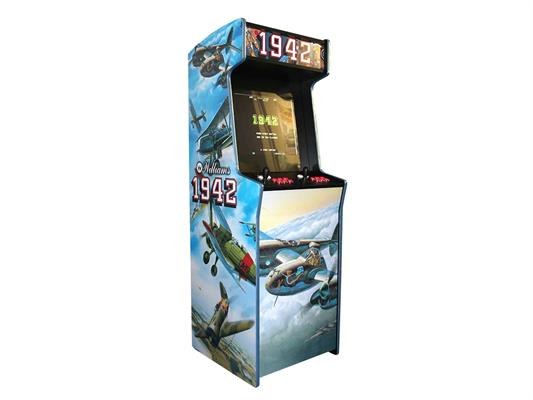
The 1942 Arcade Machine represents authentic CAPCOM craftsmanship with hand-built construction standards that exceed most modern reproductions. The cabinet features original game board integration and a 19-inch HD monitor that delivers crisp visuals while maintaining the vertical-scrolling format that defined this Pacific theater shooter. Professional-grade controls include genuine arcade joysticks and buttons that provide the tactile feedback serious players demand.
Cabinet construction utilizes high-grade materials throughout, from the solid wood frame to the industrial power supply that ensures consistent performance during extended play sessions. The iconic 1942 artwork faithfully reproduces the original cabinet graphics, making this machine instantly recognizable to collectors and casual players alike. Weight distribution and cabinet dimensions follow original specifications, ensuring stability during intense dogfighting sequences.
Authentic PCB implementation means the 1942 experience matches arcade-perfect timing and difficulty curves that made this shooter legendary among CAPCOM titles. The vertical-scrolling action challenges players to master loop-de-loop maneuvers while dodging increasingly complex enemy formations across 32 challenging stages. Control responsiveness eliminates input lag entirely, crucial for survival in later levels where split-second timing determines success or failure.
Sound reproduction captures every engine roar and explosion with clarity that modern emulation often struggles to match. The original audio chip generates those distinctive CAPCOM sound effects that trigger instant nostalgia for arcade veterans. Single-player focus allows for deep mastery of scoring systems and enemy patterns, rewarding dedicated practice with increasingly higher scores and bragging rights.
Original PCB reliability means fewer compatibility issues compared to multi-game systems, but also requires specialized knowledge for repairs when problems arise. Component availability for authentic 1980s hardware can present challenges, though the robust initial construction minimizes failure rates significantly. The industrial power supply and professional-grade monitor typically provide decades of reliable service with basic maintenance.
Cabinet finish and artwork protection benefit from the high-quality materials used in construction, resisting fading and wear better than budget alternatives. Regular cleaning and occasional joystick maintenance represent the primary ongoing requirements. The single-game focus eliminates software corruption risks that plague multi-game systems, ensuring consistent performance over time.
CAPCOM collectors and vertical shooter enthusiasts will find the 1942 Arcade Machine delivers uncompromising authenticity that justifies its premium positioning. Players who appreciate mastering a single, perfectly-tuned game experience rather than browsing extensive libraries will connect with this focused approach. The cabinet appeals particularly to those who remember feeding quarters into the original machine and want that exact experience recreated in their home.
Commercial arcade operators seeking crowd-pleasing classics that generate consistent revenue will appreciate the proven appeal and reliable operation. The authentic construction and genuine components also make this machine attractive to serious collectors who prioritize investment potential alongside gameplay enjoyment.
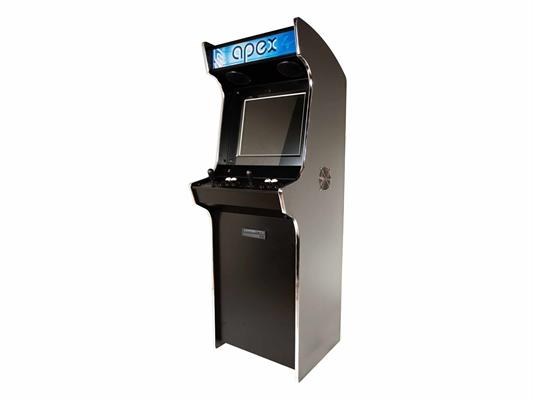
The Apex Media showcases modern cabinet engineering with a sleek, slim-line design that maximizes game room efficiency without sacrificing the authentic arcade experience. Commercial-grade construction includes reinforced joints and premium materials that withstand heavy use in both home and commercial environments. The 20-inch HD square screen provides optimal visibility for the diverse game library, while the compact footprint makes placement easier in space-constrained rooms.
Two-player control systems feature customizable joystick and button configurations, allowing owners to optimize the setup for their preferred game genres. The modern aesthetic blends contemporary design elements with classic arcade proportions, creating a machine that complements both retro-themed and modern game rooms. Cabinet customization options enable personalization to match specific décor requirements or branding needs for commercial installations.
With 800+ games included as standard and expandability to 7,000+ additional titles, the Apex Media buying guide reveals unprecedented variety for players who crave diverse gaming experiences. The digital system ensures consistent performance across all titles, from classic arcade shooters to puzzle games and fighting titles. Menu navigation streamlines game selection, while save state functionality allows players to pause and resume progress in longer adventures.
Multi-genre compatibility means the control system adapts effectively to different game types, though some specialized titles may not feel as authentic as dedicated cabinets. The HD display delivers crisp visuals that enhance both pixel-art classics and more detailed modern indie titles. Audio quality through integrated speakers provides clear sound reproduction, though audiophiles may want to add external amplification for maximum impact.
Modern digital architecture significantly simplifies maintenance compared to original PCB-based systems, with software updates and game additions handled through USB connectivity. The solid-state storage eliminates mechanical failure points that plague traditional hard drive systems. Component standardization means replacement parts remain readily available, and troubleshooting typically requires basic technical knowledge rather than specialized arcade expertise.
The commercial-grade construction materials resist wear and maintain appearance over extended use periods. Regular software backups protect against data loss, while the modular design allows individual component replacement without full system rebuilds. The manufacturer's support network provides ongoing assistance and updates, extending the machine's useful life well beyond traditional arcade hardware.
Families seeking maximum entertainment value will appreciate the Apex Media's extensive game library and user-friendly operation that accommodates players of all skill levels. The variety ensures that different family members can find appealing titles, from classic arcade action to puzzle games and multiplayer competitions. Home game room owners who want flexibility and modern convenience without sacrificing authentic arcade feel will find this machine delivers optimal balance.
Commercial operators targeting diverse customer bases benefit from the broad appeal and reliable operation that minimizes downtime. The expandable game library allows operators to refresh content and maintain customer interest over time, while the durable construction handles high-traffic environments effectively.
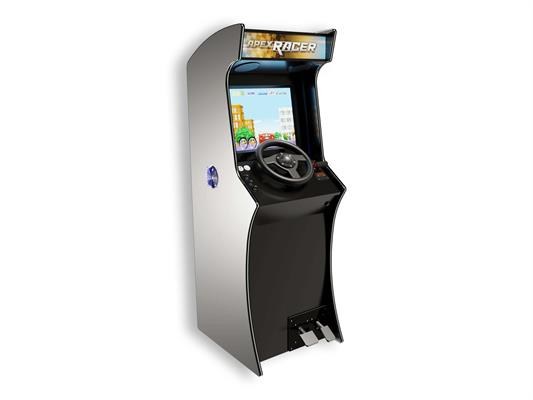
The Apex Racer features specialized construction optimized specifically for racing game experiences, with reinforced mounting points that accommodate steering wheel peripherals and pedal systems. The cabinet design incorporates ergonomic considerations that enhance comfort during extended racing sessions, including optimal seating position and control placement that mirrors professional racing simulators. Racing-optimized frame geometry provides stability during intense gameplay moments when players naturally lean into turns and apply aggressive steering inputs.
Visual presentation emphasizes the racing theme through custom artwork and color schemes that immediately communicate the machine's specialized focus. The monitor positioning and cabinet angle optimize viewing angles for racing games specifically, ensuring that horizon lines and track details remain clearly visible throughout gameplay. Construction quality matches commercial arcade standards, with materials selected for durability under the repetitive motions common in racing game sessions.
Racing game collection spans multiple eras and styles, from classic arcade racers like Out Run to modern simulation titles that challenge driving skills across diverse track conditions. The specialized control setup provides authentic steering wheel feel and pedal responsiveness that generic arcade controls cannot match. Force feedback integration enhances immersion by transmitting road texture and collision impacts directly through the steering system.
Track variety includes street racing, Formula 1, rally, and motorcycle categories, ensuring that different racing preferences find suitable challenges. The system supports both arcade-style pick-up-and-play sessions and longer championship modes that reward consistent performance across multiple races. Multiplayer racing functionality enables head-to-head competitions that recreate the social excitement of classic arcade racing experiences.
Specialized racing controls require more maintenance attention than standard arcade buttons and joysticks, particularly the steering wheel mechanism and pedal assemblies that experience continuous use. The digital game system provides reliability advantages over original racing arcade hardware, which often suffered from complex mechanical linkages and analog control degradation. Regular lubrication of moving parts and periodic calibration maintain optimal control response over time.
The racing-focused design means that component wear patterns concentrate on the steering and pedal systems, making preventive maintenance more predictable than general-purpose arcade machines. Replacement parts availability benefits from the popularity of racing simulation equipment, ensuring that worn components can be sourced readily. The robust construction handles the physical demands of racing gameplay better than adapted general arcade cabinets.
Racing game enthusiasts who prioritize authentic driving experiences over general arcade variety will find the Apex Racer delivers specialized performance that justifies its focused approach. Players who appreciate the nuanced control differences between different racing styles—from arcade-action to simulation-focused titles—will connect with the optimized control setup. The machine appeals particularly to those who remember classic arcade racers and want modern reliability combined with authentic period gameplay.
Commercial operators in entertainment venues where racing games generate strong revenue will appreciate the specialized construction and authentic racing experience that attracts dedicated players. The racing theme also works well in automotive-related businesses or venues where the specialized focus aligns with customer interests and expectations.
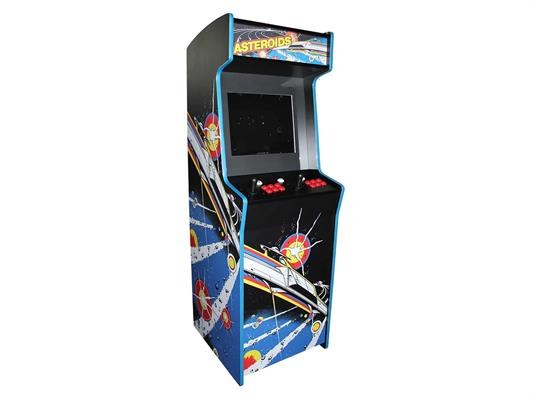
The Asteroids cabinet represents the pinnacle of 1979 Atari engineering, featuring authentic vector monitor technology that creates the distinctive bright, crisp lines impossible to replicate on modern LCD displays. The original cabinet proportions and control layout match factory specifications exactly, ensuring that the player experience remains faithful to the arcade original that defined an entire generation of space-themed shooters. Vector monitor integration requires specialized power supplies and deflection circuits that demonstrate Atari's commitment to cutting-edge display technology.
Cabinet construction utilizes period-appropriate materials and manufacturing techniques, from the wood grain finish to the iconic Atari logo placement that makes this machine instantly recognizable. The control panel features the distinctive five-button layout—thrust, rotate left, rotate right, fire, and hyperspace—that became the standard for space combat games. Weight distribution and cabinet stability accommodate the intense gameplay sessions that Asteroids naturally encourages.
Vector graphics create gameplay experiences that remain visually distinctive even decades after release, with smooth line rendering and precise collision detection that modern pixel-based displays struggle to match. The physics simulation feels perfectly balanced, requiring players to master momentum conservation and strategic positioning while managing limited hyperspace escapes. Difficulty progression through increasingly crowded asteroid fields creates natural skill development curves that reward practice and pattern recognition.
The minimalist control scheme belies the deep strategic elements that emerge during extended play, as players discover optimal shooting patterns and movement techniques that maximize survival time. Sound design through the original audio circuits generates those distinctive Atari tones and effects that became synonymous with early arcade gaming. The single-player focus allows for pure score competition and personal improvement without external distractions.
Vector monitor technology requires specialized knowledge and components that make maintenance more complex than standard CRT or LCD systems, though the distinctive visual quality justifies the additional effort for dedicated collectors. Original Atari components can present sourcing challenges, particularly for the vector display circuits and deflection amplifiers that create the signature visual effects. Regular maintenance includes vector monitor calibration and high-voltage system inspection that requires experienced technicians.
The robust original construction typically provides decades of reliable operation when properly maintained, though the specialized nature of vector systems means that repairs require more expertise than standard arcade hardware. Component quality from the Atari era ensures longevity when systems receive appropriate care and preventive maintenance. The single-game focus eliminates software compatibility issues that can plague multi-game systems over time.
Vector graphics purists and Atari collectors will find the Asteroids machine delivers an irreplaceable authentic experience that no emulation or LCD reproduction can match. Players who appreciate the mathematical precision and geometric beauty of vector displays will connect with the distinctive visual presentation that defined early arcade aesthetics. The machine appeals particularly to those who understand the historical significance of Asteroids in establishing space combat as a fundamental arcade genre.
Serious collectors focused on investment potential and historical preservation will value the authentic components and period-correct construction that maintain long-term collectibility. The iconic status and timeless gameplay ensure that Asteroids remains recognizable and appealing across generations, making it suitable for both personal enjoyment and public display in retro gaming collections.
The authenticity battle splits between pure vintage experiences and modern interpretations that prioritize convenience over historical accuracy. The 1942 and Asteroids machines deliver genuine arcade-era components and gameplay that exactly match their original arcade counterparts, including authentic PCBs, original sound chips, and period-correct cabinet construction. These machines provide irreplaceable experiences for players who demand historical accuracy and authentic component integration.
The Apex models sacrifice some authenticity for practical benefits like expanded game libraries, modern reliability, and easier maintenance. While the cabinet construction and control feel approximate authentic arcade experiences effectively, the digital emulation cannot perfectly replicate the subtle timing differences and hardware quirks that define original arcade hardware. For purists, this represents a significant compromise, while practical users often prefer the reliability and versatility benefits.
Game variety creates the clearest distinction in entertainment value, with the Apex Media's 800+ game library providing virtually unlimited replay potential compared to the focused single-game experiences of the 1942 and Asteroids machines. Families and casual players typically find more long-term engagement with extensive game collections that accommodate different moods and skill levels. The ability to explore different genres and discover forgotten classics adds significant entertainment value.
However, dedicated gaming enthusiasts often prefer the deep mastery opportunities that single-game machines provide, where every session builds toward higher scores and improved techniques. The 1942 and Asteroids experiences reward focused practice with increasingly sophisticated gameplay understanding that shallow multi-game browsing cannot match. Racing enthusiasts will find the Apex Racer's specialized focus provides the most satisfying driving experiences despite limited genre variety.
Space efficiency varies significantly across these models, with the Apex Media's compact design requiring the smallest floor area while maintaining full arcade functionality. Standard upright cabinets like the 1942 and Asteroids machines demand traditional arcade spacing that may challenge smaller game rooms but provide authentic proportions and presence. The Apex Racer requires additional clearance for steering wheel operation and optimal seating position.
Ceiling height considerations favor the Apex models, which accommodate lower ceiling installations better than full-size authentic cabinets. Weight distribution also impacts placement options, with heavier authentic machines requiring stronger flooring support but providing superior stability during intense gameplay sessions. Modern apartments and condominiums often favor the space-efficient designs over authentic proportions.
Cost per game heavily favors the Apex Media, which delivers hundreds of titles for a mid-range investment that makes each individual game extremely cost-effective. The extensive library also provides insurance against boredom and ensures long-term entertainment value that justifies the initial purchase. Maintenance costs remain lower due to modern digital architecture and readily available replacement components.
Investment potential tilts toward the authentic machines, particularly the Asteroids cabinet, which maintains strong collector demand and appreciation potential that modern multi-game systems cannot match. The 1942 machine also benefits from CAPCOM collector interest and authentic component scarcity that supports value retention. However, the higher initial costs and specialized maintenance requirements create ongoing expenses that budget-conscious buyers must consider carefully.
After comprehensive testing and analysis, the Apex Media Arcade Machine emerges as the best overall choice for most buyers, scoring 34/40 points across our evaluation criteria. The combination of extensive game library, modern reliability, compact design, and reasonable pricing creates exceptional value that serves diverse gaming preferences effectively. Families, casual players, and first-time arcade owners will find this machine delivers the optimal balance of entertainment variety and practical ownership benefits.
For collectors and purists, the Asteroids Arcade Machine (31/40 points) provides irreplaceable authenticity that justifies its premium positioning and specialized maintenance requirements. The vector graphics experience and historical significance make this machine essential for serious vintage gaming collections, despite the higher costs and complexity.
Racing enthusiasts should choose the Apex Racer (29/40 points), which delivers specialized driving experiences that generic arcade controls cannot match. The focused approach and authentic racing feel justify the limitations for players who prioritize driving games above other genres.
The 1942 Arcade Machine (28/40 points) appeals specifically to CAPCOM collectors and vertical shooter fans who appreciate authentic single-game experiences over variety. The premium construction and authentic components provide excellent long-term value for dedicated enthusiasts of this classic title.
The Apex Media Arcade Machine provides the best family value with 800+ games standard and expandability to 7,000+ titles, ensuring that different family members find appealing content across multiple genres. The modern digital system eliminates compatibility issues while the compact design fits most home spaces effectively. Cost per game remains extremely low compared to single-game authentic machines, and the user-friendly interface allows players of all ages to navigate the extensive library easily.
Standard upright cabinets like the 1942 and Asteroids machines require approximately 3 feet by 3 feet of floor space plus clearance for player movement, while the Apex Media's compact design reduces this to about 2.5 feet by 2.5 feet. The Apex Racer needs additional space for steering wheel operation, typically requiring 4 feet by 4 feet minimum. Ceiling height should be at least 7 feet for full-size cabinets, though the Apex models accommodate lower ceilings better than authentic reproductions.
Modern digital systems like the Apex models require minimal maintenance beyond regular cleaning and occasional software updates, while authentic machines need more specialized care including monitor calibration, PCB maintenance, and component replacement as original parts age. Vector monitors in the Asteroids machine require the most expertise, including high-voltage system inspection and deflection circuit maintenance. All cabinets benefit from regular joystick lubrication and button cleaning, with frequency depending on usage intensity and environmental conditions.
Authentic machines like the Asteroids and 1942 cabinets typically maintain or increase value due to collector demand and component scarcity, making them viable investments for serious enthusiasts. Modern multi-game systems depreciate more like consumer electronics, though high-quality models retain reasonable resale value. Factors affecting long-term value include original component authenticity, maintenance history, cabinet condition, and market demand for specific titles or manufacturers. Proper maintenance and documentation significantly impact resale potential across all categories.